Secret Network Tweaks for Fixing Valorant Packet Loss Permanently
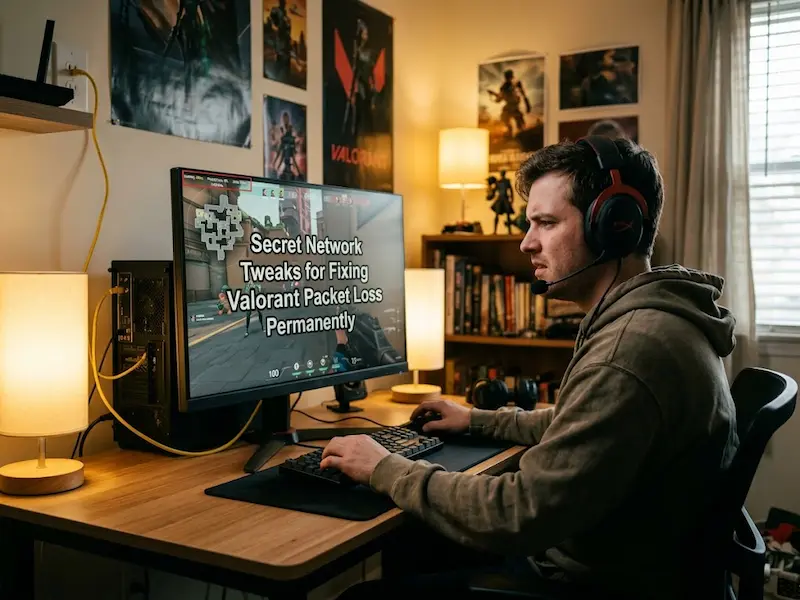
If you are dealing with fixing valorant packet loss, the frustrating part is that your ping can look perfectly normal while bullets still fail to register and your character suddenly snaps backward. That usually points to an unstable connection rather than simple high latency. Riot’s own troubleshooting guidance recommends checking the connection itself, testing wired Ethernet, removing unnecessary VPN or proxy layers, renewing the IP address, flushing DNS, and checking firewall or port configuration before assuming the game is at fault.
Do not treat every network tweak as a guaranteed cure. DNS changes can affect name resolution and sometimes the path your connection takes, but they cannot repair physical packet loss between your home and Riot’s infrastructure. The goal is to isolate where the instability starts, then change one thing at a time so you know whether the result is actually better.
1. Fixing Valorant Packet Loss Starts With Hit Registration Issues and Network Jitter Solutions
Low Ping Does Not Mean a Stable Connection
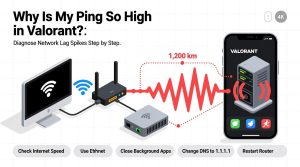
Ping is only one part of the connection story. You can have a 20 ms average response time and still experience short bursts of packet loss or inconsistent packet delivery, which is when shots feel delayed, movement becomes unpredictable, or enemies appear to teleport slightly.
Those are classic hit registration issues from a player’s perspective, although the visible symptom does not automatically prove that packet loss is the only cause. First compare a stable match with a problematic one and watch for packet-loss indicators, sudden ping spikes, or repeated network warnings.
Test Jitter Before Blaming the Game
Good network jitter solutions start with finding the source of variation rather than changing random Windows settings. Riot recommends trying a wired connection when Wi-Fi is causing problems, because Ethernet can remove wireless interference and reduce one common source of instability.
Try this sequence:
- Play one match on Ethernet if possible.
- Stop large downloads and cloud synchronization.
- Disconnect unnecessary VPNs or proxies.
- Compare packet loss during several matches.
- Test again at different times of day.
If the problem disappears on Ethernet, your first suspect should be the wireless connection, not VALORANT.
2. DNS Server Routing and IP Refresh Can Clean Up the Windows Side
Try a Different DNS Without Expecting Magic
Your dns server routing deserves a controlled test when connection problems appear inconsistent. Riot’s network troubleshooting guide has recommended trying public DNS services such as Google DNS and Cloudflare DNS, while warning that some ISPs may restrict third-party DNS configurations.
Common options include:
- Google DNS 8.8.8.8 and 8.8.4.4
- Cloudflare DNS 1.1.1.1 and 1.0.0.1
DNS does not magically reduce every packet-loss problem. Its main job is resolving domain names, so the biggest benefit is usually seen when the ISP’s DNS service is unreliable or problematic rather than when packets are being lost somewhere deeper in the route.
Flush DNS and Renew the IP
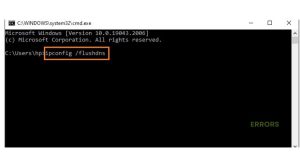
Before changing more complicated settings, refresh the local network state. Microsoft documents ipconfig /flushdns for clearing the Windows DNS resolver cache, while Riot specifically recommends releasing and renewing the IP and flushing DNS as part of its connection troubleshooting process.
Open Command Prompt and run:
- ipconfig /release
- ipconfig /renew
- ipconfig /flushdns
Then restart the PC and test the same VALORANT server conditions again. This is a simple diagnostic step, not a permanent packet-loss cure, so keep the result only if it actually improves your connection.
Check the Route Instead of Blaming DNS
If changing DNS does nothing, stop repeatedly switching DNS providers. A connection can still suffer from congestion or routing problems after DNS resolution has already completed, which means the useful investigation moves further upstream toward the ISP, router, or route to the game server.
This is where repeated hit registration issues become useful evidence. If the same symptoms happen only at certain times, on one connection, or only through one route, that pattern is more informative than simply saying the game feels laggy.
3. Reducing Bandwidth Competition Is the Real Network Jitter Solution
When someone else starts downloading a huge file while you are taking a ranked fight, the problem may not be raw internet speed. Network congestion can increase queueing and latency, particularly when the connection is saturated, so reducing server response time is not the same thing as reducing local network congestion.
Start with the router rather than obscure Windows registry tweaks:
- Pause large downloads during competitive matches.
- Stop cloud backup or synchronization temporarily.
- Check whether another device is consuming most of the connection.
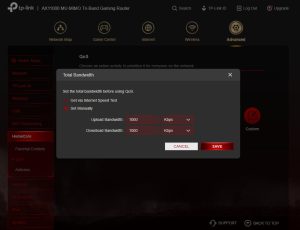
- Enable router QoS if your model supports it.
- Prioritize gaming traffic where your router provides a reliable option.
- Avoid downloading game updates during ranked sessions.
Windows also supports QoS policies that can classify traffic and apply prioritization or throttling under supported configurations. Microsoft documents application-based traffic rules, DSCP marking, and throttle rates, but this is more advanced than the average player needs.
A better rubberbanding lag fix is therefore to control congestion first rather than blindly changing registry values from a random gaming forum. If packet loss continues even when your network is quiet and the PC is connected through Ethernet, contact the ISP or Riot Support with evidence instead of endlessly tweaking Windows.
If you are already checking VALORANT content regularly, you can also keep your game-related workflow organized with a VALORANT item shop checker guide while troubleshooting your connection separately.
Q&A
Can Changing DNS Completely Stop VALORANT Packet Loss?
No. DNS can help with name-resolution or ISP DNS problems, but it cannot repair packet loss caused by Wi-Fi interference, router congestion, ISP routing, or upstream network faults.
Is Ethernet Always Better Than Wi-Fi for VALORANT?
Not automatically, but Ethernet removes many variables associated with wireless interference and signal quality. Riot specifically recommends trying a wired connection when Wi-Fi is causing connection problems.
Why Does VALORANT Feel Worse When Someone Is Downloading?
A saturated connection can create congestion and increased queueing, making latency and packet delivery less consistent. QoS or simply stopping large background transfers can help, but the best solution depends on where the congestion occurs.



Leave a Reply